


Protecting honey bees through organic farming and flower strips
Honey bees are more likely to thrive when their habitats include organically farmed land and flower strips , new research from Germany shows.
A team from Martin Luther University Halle-Wittenberg and the University of Göttingen found that honey bee colonies in the vicinity of such land uses grew stronger and were generally healthier than honey bees that did not have those benefits. The researchers said that was most likely because the bees have a diverse and continuous food supply and were less exposed to pesticides in those areas.
“The way that farmers cultivate their land has a major impact on nature. Intensively farmed fields, pesticides and monocultures pose a threat to many animal and plant species. This is particularly true for pollinators, which include honey bees,” says Prof. Robert Paxton, a bee researcher at Martin Luther University.
The researchers looked at three actions that could counter the threat: increased use of organic farming, the planting of flower strips among the crops and creating perennial semi-natural habitats near farmed land. According to the German Environment Agency, around half of Germany’s land is used for agriculture.
“In theory, these measures all make sense. However, we know little about how each of these affect insects, especially honey bees,” Paxton said in a post on the university’s website.
So the team from Halle and Göttingen carried out a study at 16 locations in Lower Saxony, Germany. Each of these locations differed in their proportion of organic fields, flower strips and perennial semi-natural habitats.
The researchers placed a total of 32 honey bee colonies at the sites and observed them for about a year. They analyzed, for example, colony growth and parasite infestation. Special attention was paid to the varroa mite—a particularly dangerous pest of honey bees which can transmit fatal viruses. The data gathered about the bee colonies was then compared.
“Organic farming had the greatest impact—the larger the proportion of these areas, the lower the parasite infestation of a colony. This improved colony growth,” explained lead author Patrycja Pluta from Martin Luther University.
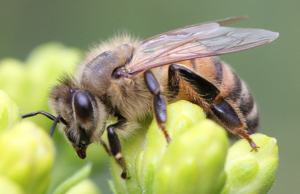
She said one reason could be that organic farming uses fewer pesticides and, instead, other plant protection measures. Flower strips were also advantageous to honey bees: the number of Varroa mites was lower in areas with a lot of flower strips.
“This could be due to the fact that a diverse and rich food supply strengthens the honey bees’ immune system,” Pluta said.
Perennial semi-natural habitats, on the other hand, tended not to help the honey bees. Larger areas generally meant a greater infestation of varroa mites. And, unlike flower strips, the areas are not designed to provide an abundant supply of food for honey bees and other pollinators.
“Perennial semi-natural landscapes are an important tool for promoting biodiversity and they serve as a habitat for many animals. Honey bees, that are managed by humans, are the exception,” Paxton said.
The honey bee study was published in the Journal of Applied Ecology. The researchers hope the findings of the study help to improve agricultural landscape management for bees and other pollinators.
Read more: Regenerative agriculture: Investing in food production in a more sustainable way


Read Next


