


Regenerative agriculture: Investing in food production in a more sustainable way
Beyond humanity’s reliance on agriculture to produce the food we need to survive, one in eight people depend on the food and agriculture system for their livelihoods. Veris Wealth Partners believes that both communities and ecosystems can benefit from regenerative agriculture.
In The Regenerative Agriculture Revolution, our first publication on the topic, we defined the practice as “a holistic land management practice that leverages the power of photosynthesis in plants to close the carbon cycle and build soil health, crop resilience and nutrient density.”
In many ways, this definition holds true today. Regenerative agriculture is a system of practices, including no till, cover cropping, managed grazing, crop rotation, integrated crop and livestock systems, and precise input application.
But as regenerative agriculture has continued to gain momentum within the impact investing space, Veris has expanded our firm’s definition to differentiate agricultural practices that “restore, improve, and enhance the biological vitality” of farming landscapes while supporting “the resilience of the communities and broader value chains in which they are situated” in alignment with the Croatan Institute’s definition offered in its 2019 paper Soil Wealth: Investing in Regenerative Agriculture across Asset Classes.
Regenerative agriculture provides a variety of benefits, including:
- Soil: reduced erosion, enriched biodiversity, and the maintenance of soil carbon (which can help address climate change).
- Water: improved soil water retention, reduction in water waste, and reduction in water pollution from run-off.
- People: increased farmer incomes, more resilient agricultural communities, and increased food security delivered by a more resilient and equitable food system.
Unfortunately, every one of the benefits listed above also illustrates the potential risks of maintaining the status quo.
Global food demand is expected to rise 58%-98% by 20504, but conventional farming practices produce greenhouse gasses that exacerbate the negative effects of climate change, including greater levels of biodiversity loss and productivity loss, which could then lead to farmers clear more land and accelerate deforestation to grow crops to meet the rising food demand.
All of that creates a dangerous feedback loop. That’s why we believe that the need for a global transition to regenerative agriculture across our food and farming systems is urgent.
Opportunities to help catalyze the transition
There are more opportunities than ever to invest in regenerative agriculture. Veris has historically had sustainable and regenerative agriculture as a thematic focus area. We have seen an increasing focus on investing in nature-based solutions and protecting biodiversity, inclusive of regenerative agriculture, in recent years.
Whether providing impact first capital to catalyze the transition or seeking market-rate returns, there are many funds doing this important work. Among some of the fund managers that Veris’ clients work with are Potlikker Capital, Dirt Capital and Root Capital.
Potlikker Capital is a farm community governed, charitable-integrated capital fund, aiming to provide BIPOC farmers in America access to non-extractive capital & technical assistance to help farmers transition to regenerative practices and help create a more sustainable and healthier food ecosystem while promoting wealth creation.
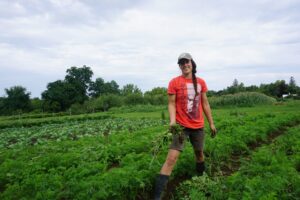
Dirt Capital works with regenerative farmers in the U.S. and helps them expand their business by facilitating innovative farmland transitions through fair, long-term lease-to-own and other customized arrangements that allow farms to expand securely with defined pathways to ownership. They also limit future appreciation of farmland sale to make ownership affordable. In many of Dirt’s projects, they partner with other mission-aligned organizations to make land more affordable for farmers and provide technical assistance when needed.
Root Capital provides credit and capacity building to small agricultural businesses cooperatives in rural communities globally, to solve for the unmet financial need which is required to grow these businesses. Additionally, it has a focus on gender equity through its Woman Agriculture Initiative, as well as a growing focus on climate adaptation for farmers, and the use of sustainable and regenerative practices as a climate mitigation tool.
This thematic focus is also addressed by loan funds and CDFIs (community development financial institutions), such as Calvert Impact Capital Community Investment Note, Coastal Enterprise Inc (CEI) Investment Notes, Community Vision Capital & Consulting Loan Fund, and RSF Social Investment Fund.
Commitments from public and private equities are both increasing and evolving. We are still seeing investments or commitments similar to prior years (e.g., Barilla working with 9,000 farms on sustainable agriculture, General Mills applying regenerative agriculture to 1 million acres by 2030).
Read more: I remade my tea brand from Honest to Just and found a gift in the bargain
However, some companies are taking a corporate impact investing/venture approach to commitments. In 2022, Unilever co-invested in a private equity regenerative agriculture fund in partnership with Tikehau Capital and AXA.
Finally, private equity – which has traditionally not been active in the agriculture sector – is starting to pay more attention, with this new attraction driven by the opportunity implied in the forecasted need for such increased food production mentioned above.
Given the benefits of investing in regenerative agriculture, not only for mitigating climate change, but also from a social perspective, such as wealth creation for farmers and addressing racial and gender equity issues, we wish to emphasize the importance of investing in such funds and managers accelerating the transition from traditional to regenerative and sustainable agriculture practices.
Read more: State of the Field: An Overview of Investing in Regenerative Agriculture in
2024
Maya Zamir is the associate director, investments at Veris. She is responsible for investment manager due diligence, thematic research and evaluation of impact metrics.
M.A. Miller is an MBA candidate at Columbia Business School who recently completed an investments internship at Veris.


Read Next


